
What Is Jaggery? A Complete Guide to Traditional Indian Jaggery by The Farmhouse
Discover what jaggery is, how it is traditionally made in India, and why it is gaining global recognition as a natural alternative to refined sugar.
2/18/20263 min read
What Is Jaggery? A Complete Guide to Traditional Indian Jaggery by The Farmhouse
As Agryx Global Exports begins its journey into the international market, we are proud to introduce one of India’s most treasured natural sweeteners to the world. The Farmhouse Jaggery is traditionally made, farm grown, and carefully crafted from our own sugarcane fields.
With rising demand in the United States, Dubai, and Malaysia for natural sweeteners and clean label products, jaggery is gaining global recognition as a healthier alternative to refined sugar.
This article serves as the foundation of our blog series. Let us begin with the basics.
What Is Jaggery?
Jaggery, also known as Gur in India, is an unrefined natural sweetener made by concentrating sugarcane juice. Unlike white sugar, jaggery is not chemically processed or bleached. It retains its natural molasses, minerals, and deep caramel flavor.
It is commonly referred to as Indian jaggery or traditional cane jaggery in global markets.
For centuries, jaggery has been a staple in Indian households, Ayurvedic practices, and traditional recipes. Today, it is increasingly popular in international markets as consumers search for natural sugar alternatives.
How Is Jaggery Made?
Traditional jaggery production follows a simple and natural process.
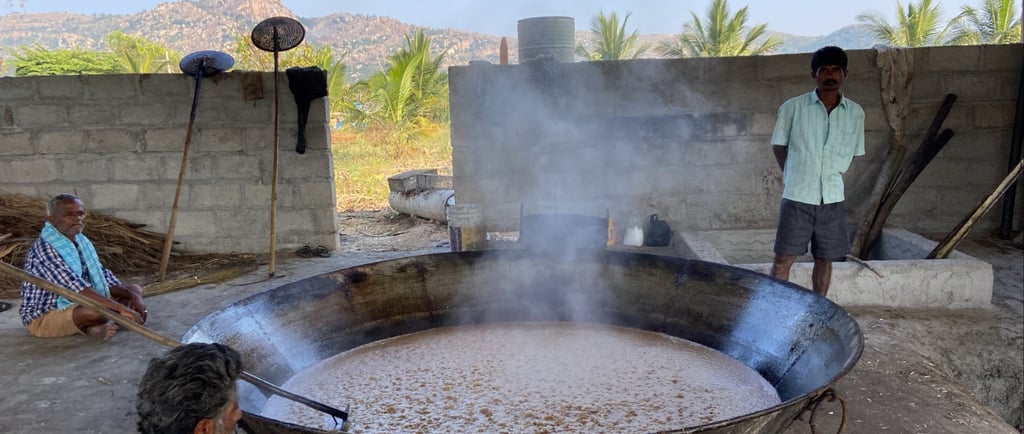
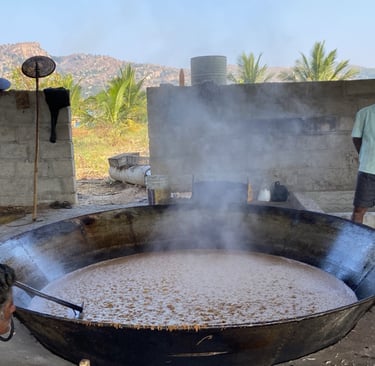
Fresh sugarcane is harvested and crushed to extract juice. The juice is filtered to remove fiber and impurities. It is then slowly boiled in large iron pans over controlled heat. As it thickens, impurities rise to the surface and are skimmed away manually. No chemicals are added during this process.
The concentrated syrup is poured into molds and allowed to cool into solid blocks or rounds.
At The Farmhouse, we grow our own sugarcane and manufacture our own jaggery. This farm to finished product approach ensures quality control, purity, and full traceability. Our jaggery is free from artificial additives, synthetic chemicals, and bleaching agents.
Major Jaggery Producing States in India
India is the largest producer of jaggery in the world. The major jaggery producing states include:
Maharashtra
Karnataka
Uttar Pradesh
Tamil Nadu
Andhra Pradesh
Bihar
Maharashtra and Karnataka are particularly known for high quality jaggery production due to favorable climate and sugarcane yield. Uttar Pradesh also contributes significantly as one of the largest sugarcane growing regions.
The taste, texture, and color of jaggery can vary depending on soil conditions, sugarcane variety, and traditional methods used in each region.
Jaggery vs Sugar: What Is the Difference?
One of the most searched questions globally is the difference between jaggery and sugar.
Refined sugar undergoes heavy industrial processing. Sugarcane juice is chemically treated, clarified, crystallized, centrifuged, and bleached. During this refining process, most natural minerals are removed. The final product is nearly pure sucrose.
Jaggery is minimally processed and retains its natural molasses. This gives it a golden brown color and rich flavor profile. It also preserves trace minerals such as iron, potassium, magnesium, and small amounts of calcium.
In simple terms, sugar provides sweetness alone. Jaggery provides sweetness along with natural nutrients and depth of flavor.
Health Benefits of Jaggery
While jaggery should still be consumed in moderation, it offers nutritional advantages compared to refined sugar.
Natural source of iron
Jaggery contains iron, which supports healthy hemoglobin levels and may help prevent iron deficiency when included as part of a balanced diet.
Supports digestion
Traditionally in India, jaggery is consumed after meals to stimulate digestive enzymes and support gut health.
Rich in antioxidants
Because it retains molasses, jaggery contains antioxidants that help combat oxidative stress.
Provides sustained energy
Jaggery releases energy gradually, reducing the sudden spikes and crashes associated with refined sugar.
Seasonal wellness benefits
In Indian tradition, jaggery is often consumed in winter due to its warming properties and nutrient density.
These health benefits of jaggery have contributed to its rising popularity in health conscious markets like the United States and Dubai.
Why Global Markets Are Choosing Indian Jaggery
Consumers in the United States are actively searching for organic jaggery, natural cane sugar alternatives, and unrefined sweeteners. Dubai’s multicultural population values authentic traditional foods. Malaysia has culinary familiarity with natural sweeteners, making jaggery an ideal fit for local cuisine and bakery applications.
The global shift toward clean label food products, sustainable farming, and minimally processed ingredients has created strong demand for export quality jaggery.
Agryx Global Exports is positioned to meet this demand by supplying premium quality Indian jaggery manufactured directly from our own farms.
The Farmhouse Advantage
The Farmhouse is not just a brand. It represents agricultural heritage and vertical integration.
We grow our own sugarcane.
We manufacture our own jaggery.
We oversee quality from cultivation to packaging.
This ensures consistent taste, purity, and international export standards.
As Agryx Global Exports expands into the United States, Dubai, and Malaysia, our mission is to deliver authentic Indian jaggery to global consumers seeking healthier sweetener alternatives.
Conclusion
Jaggery is more than a sweetener. It is a traditional Indian superfood, a natural sugar alternative, and a symbol of sustainable agriculture.
As we begin this blog series, we invite distributors, retailers, and consumers worldwide to rediscover the richness of authentic farm produced jaggery.
The golden sweetness of The Farmhouse Jaggery is rooted in Indian soil and ready for global shelves.
Stay connected with Agryx Global Exports as we continue to explore the world of jaggery, natural sweeteners, and international food exports in the coming articles.